Water damage strikes without warning. A burst pipe at 2 a.m., a flooded basement after a nor'easter, a sewage backup that turns your lowest level into a biohazard zone every minute standing water sits in your property, the damage compounds. Drywall absorbs moisture and begins to swell. Hardwood floors buckle. Mold colonies can establish within 24 to 48 hours in Delaware's humid Mid-Atlantic climate.
Delaware Water Damage Pros provides emergency water damage restoration across every city and town in New Castle County. Our IICRC-trained technicians respond to water damage emergencies around the clock 24 hours a day, 7 days a week, 365 days a year because water intrusion does not wait for business hours, and neither do we.
We handle every phase of the water damage restoration process from the initial emergency call through complete structural restoration. That includes rapid water extraction using truck-mounted and portable extraction units, industrial-grade structural drying with commercial air movers and desiccant dehumidifiers, moisture mapping with infrared thermal imaging cameras and penetrating moisture meters, antimicrobial treatment, content restoration, and full reconstruction of damaged materials.
Whether you are a homeowner dealing with a flooded basement in Wilmington, a property manager handling a burst pipe in a Newark apartment complex, or a business owner facing commercial water damage along the Route 40 corridor in Bear, our team has the equipment, the training, and the local knowledge to restore your property to its pre-loss condition.
If you are dealing with water damage right now, call us immediately. Every hour of delay increases damage, raises restoration costs, and creates conditions for secondary damage like mold growth and structural compromise.
Emergency Water Damage Restoration Why Response Time Matters
The IICRC's ANSI/IICRC S500 Standard for Professional Water Damage Restoration establishes a critical timeline that every property owner should understand. Within the first 24 hours of water intrusion, Category 1 clean water from sources like supply line breaks or appliance malfunctions begins transitioning toward Category 2 gray water as it contacts building materials, soils, and organic matter. After 48 hours without proper mitigation, that same water can degrade to Category 3 black water grossly contaminated water that presents serious health hazards and requires specialized biohazard protocols for safe remediation.
This is not a theoretical timeline. In New Castle County, where average relative humidity ranges from 65% to 80% during summer months and aging housing stock in communities like Wilmington, Claymont, and New Castle creates ideal conditions for moisture retention, the progression from manageable water damage to catastrophic secondary damage happens faster than most property owners expect.
Delaware Water Damage Pros maintains fully stocked response vehicles with extraction equipment, air movers, dehumidifiers, moisture detection instruments, and antimicrobial agents staged and ready for immediate deployment anywhere in New Castle County. When you call, we do not schedule you for a future appointment. We dispatch a crew to your property to begin emergency water mitigation.
Our rapid-response protocol follows the IICRC S500 framework: secure the property and stop the water source, perform emergency water extraction to remove standing water, establish a drying environment using calculated air mover placement and dehumidification based on psychrometric principles, and monitor the drying process with daily moisture readings until the structure reaches its dry standard the baseline moisture content of unaffected materials in the same building.
0-24 hrs
Category 1 clean water begins transitioning toward Category 2 gray water
24-48 hrs
Mold colonies can establish within 24 to 48 hours
48+ hrs
Water can degrade to Category 3 black water
Restoration Services
Complete Water Damage Restoration Services in New Castle County
Water damage takes many forms, and each type of water intrusion demands a specific restoration approach. We provide specialized services for every category and class of water damage from a minor supply line leak to a full-scale sewage backup or storm flood. Every service follows ANSI/IICRC S500 standards and is performed by technicians with current Water Damage Restoration Technician (WRT) certification.
Water Damage Restoration
Our core service covers the full spectrum of water damage events. From the initial assessment and water category classification through extraction, drying, decontamination, and restoration, we manage the entire process so you can focus on getting your life back to normal. We handle Category 1, Category 2, and Category 3 water damage using protocols matched to the contamination level.
Standing water causes exponential damage. Our truck-mounted extraction units remove thousands of gallons per hour, while portable extractors reach confined spaces that truck-mounts cannot access. We deploy weighted extraction tools for carpet and pad, hard-surface extraction wands for tile and hardwood, and submersible pumps for deep standing water scenarios like flooded basements and crawl spaces.
When storms, flash flooding, or river overflow pushes water into your property, the damage goes beyond what a standard water loss involves. Flood water is almost always classified as Category 3 black water containing sewage, chemicals, soil, and biological contaminants. Our flood damage protocols include full extraction, removal of unsalvageable porous materials, antimicrobial and biocide application, HEPA-filtered air scrubbing, and structural drying under containment when necessary.
Basement flooding is the most common water damage event in New Castle County. Sump pump failures during heavy rain, foundation cracks allowing groundwater intrusion, burst pipes in unheated spaces during winter freezes, and sewage backups through floor drains all put basements at risk. We provide complete basement water removal, structural drying of concrete block and poured foundation walls, and prevention consultations including sump pump upgrades and interior drainage recommendations.
Sewage backups require specialized handling under strict health and safety protocols. Category 3 black water contains pathogenic bacteria, viruses, and parasites that present serious health risks. Our certified technicians wear full personal protective equipment (PPE), establish containment zones, remove all contaminated porous materials, apply hospital-grade antimicrobial agents, and verify decontamination through post-remediation testing.
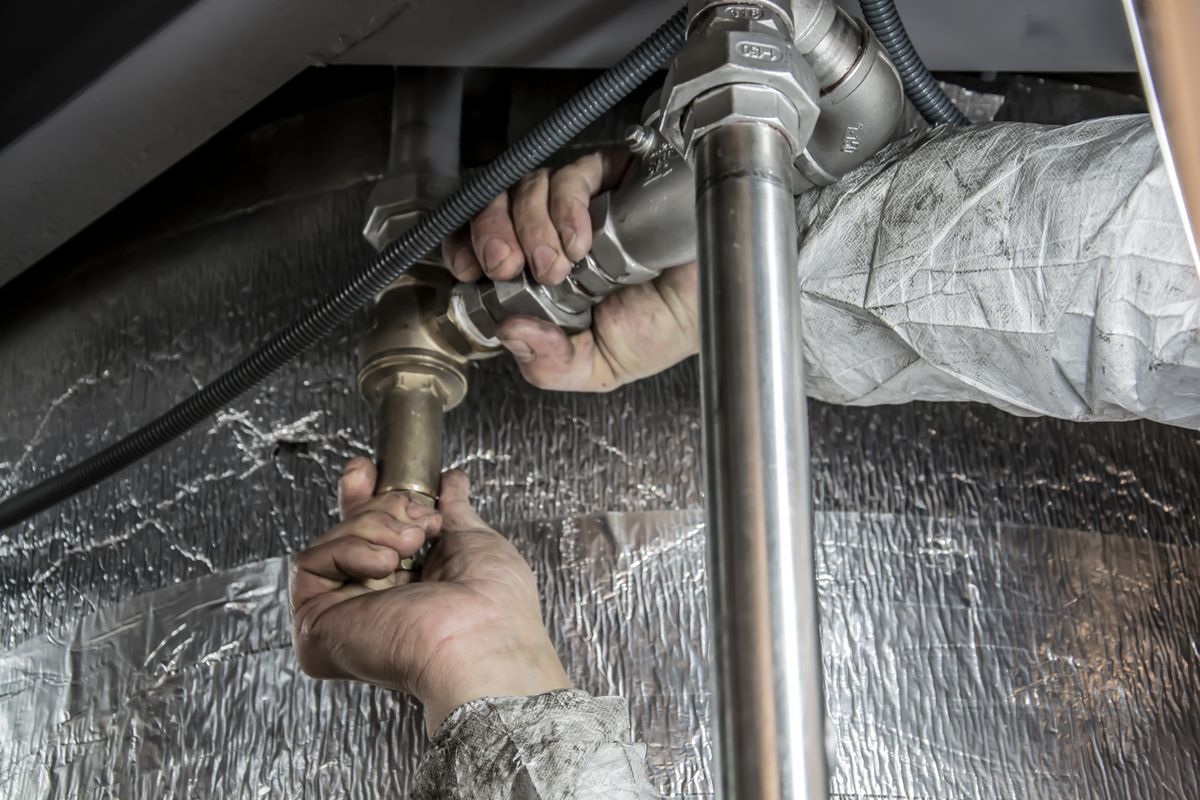
A single burst pipe can release hundreds of gallons of water per hour into your property. Frozen pipes are a leading cause of residential water damage in Delaware during winter months, when temperatures drop below the freezing threshold and inadequately insulated pipes in attics, crawl spaces, and exterior walls are vulnerable. We provide emergency water shutoff assistance, extraction of water from pipe burst events, structural drying, and coordination with licensed plumbers for permanent pipe repair.
Proper structural drying is the most technical phase of water damage restoration. It is not enough to place fans and hope for the best. Our drying protocols use psychrometric calculations to determine the exact number and placement of air movers and dehumidifiers required for the affected space. We monitor grain depression, temperature differentials, and daily moisture content readings using pin-type and pinless moisture meters alongside infrared thermal imaging to track drying progress and identify hidden moisture pockets.
Mold growth is the most common secondary damage from water intrusion. In Delaware's humid climate, mold spores can colonize damp materials within 24 to 48 hours. When water damage leads to mold, we follow ANSI/IICRC S520 protocols for mold remediation establishing containment with negative air pressure, removing colonized materials, HEPA vacuuming all surfaces, applying antimicrobial treatments, and verifying successful remediation through post-clearance testing.
Crawl spaces are out of sight and out of mind until moisture problems make themselves known through musty odors, elevated indoor humidity, or visible mold on floor joists and subfloor sheathing. Standing water in crawl spaces degrades structural wood components, promotes mold and wood-destroying insect activity, and compromises indoor air quality throughout the home. We extract standing water, dry the crawl space environment, and offer encapsulation solutions with vapor barriers, drainage matting, and dedicated crawl space dehumidifiers.
Commercial water damage carries unique challenges: larger affected areas, specialized building systems, business interruption concerns, and regulatory compliance requirements. We serve offices, retail spaces, warehouses, restaurants, medical facilities, and multi-family residential properties throughout New Castle County. Our commercial response teams bring additional extraction and drying capacity to handle large-loss events efficiently, minimizing downtime and helping you get your business operational as quickly as possible.
Our Water Damage Restoration Process IICRC S500 Standards
Every water damage restoration project we handle follows the ANSI/IICRC S500 Standard for Professional Water Damage Restoration. This is not a marketing claim it is the operational framework that governs every decision our technicians make, from the initial phone call through final moisture verification.
Here is exactly what happens when you call Delaware Water Damage Pros for water damage in New Castle County:
01
Step 1: Emergency Contact & Dispatch
When you call, our dispatch team gathers critical information: the type of water damage event, the approximate affected area, whether the water source has been stopped, and your property address. We dispatch the nearest available response team immediately. Our goal is to have boots on the ground at your property as quickly as possible, regardless of the time of day or night.
02
Step 2: Inspection, Assessment & Water Classification
Our lead technician performs a thorough inspection of the water-damaged area. This includes identifying the source and cause of the water intrusion, determining the Category of Water (contamination level), and assessing the Class of Water Damage (extent of absorption and evaporation load).
The three IICRC water damage categories:
Category 1 (Clean Water): Originates from a sanitary source broken supply lines, sink overflows without contaminants, appliance malfunctions involving clean water supply lines, rainwater through a clean entry point. Category 1 water is initially safe but degrades toward Category 2 within 24-48 hours if left untreated.
Category 2 (Gray Water): Contains significant contamination that could cause discomfort or illness if contacted or consumed. Sources include dishwasher or washing machine overflows, toilet overflows with urine but no feces, sump pump failures, and hydrostatic pressure seepage through foundation walls. Category 2 water requires enhanced safety protocols and antimicrobial treatment.
Category 3 (Black Water): Grossly contaminated water containing pathogenic, toxigenic, or other harmful agents. Sources include sewage backups, toilet overflows with feces, all outdoor flooding regardless of apparent cleanliness, and any Category 1 or 2 water that has remained stagnant for over 48 hours. Category 3 requires full personal protective equipment, containment, removal of all affected porous materials, and biocide treatment.
The four IICRC classes of water damage:
Class 1: Least amount of water absorption a small area is affected with minimal moisture in low-porosity materials
Class 2: Significant absorption water has affected an entire room, wicking up walls 12 to 24 inches, saturating carpet and cushion
Class 3: Greatest absorption and evaporation load water has come from overhead, saturating walls, ceilings, insulation, carpet, cushion, and sub-floor
Class 4: Specialty drying situations deeply held or bound water in materials like hardwood, plaster, concrete, and stone that require extended drying time and specialized techniques
03
Step 3: Water Extraction
We remove standing water using truck-mounted extraction units capable of removing thousands of gallons per hour, portable extraction equipment for areas inaccessible to truck lines, weighted extraction tools for carpet and pad, and submersible pumps for deep-water scenarios. Speed of extraction directly correlates with reduced overall damage and lower restoration costs.
04
Step 4: Structural Drying & Dehumidification
This is the most technical and critical phase. After extraction, moisture remains trapped inside building materials drywall, wood framing, subfloor sheathing, concrete, insulation. Our drying technicians calculate the specific drying requirements for the affected space using psychrometric principles: the relationship between temperature, humidity, and the capacity of air to hold moisture.
We deploy commercial air movers in calculated placement patterns to create airflow across wet surfaces, accelerating evaporation. Simultaneously, we operate commercial-grade dehumidifiers either refrigerant (LGR Low Grain Refrigerant) or desiccant units depending on conditions to remove moisture from the air and maintain the grain depression necessary for efficient drying. In specialty drying situations (Class 4), we may use heat drying systems, injectidry wall cavity drying systems, or hardwood floor drying mats.
05
Step 5: Monitoring & Documentation
We take daily moisture readings throughout the drying process using calibrated moisture meters (both pin-type penetrating meters and non-invasive pinless scanning meters) and infrared thermal imaging cameras to identify hidden moisture pockets behind walls and under flooring. We document everything moisture readings, equipment placement, photos, and drying logs for your insurance claim file.
Depending on the water category, we clean and sanitize all salvageable materials and apply EPA-registered antimicrobial agents to prevent mold growth. For Category 2 and Category 3 losses, this step includes removal and disposal of contaminated porous materials that cannot be effectively decontaminated (carpet pad, lower sections of drywall, wet insulation).
07
Step 7: Restoration & Reconstruction
Once the structure is verified dry and decontaminated, we can handle the rebuild: replacing drywall, baseboards, flooring, painting, and any other repairs needed to return your property to its pre-loss condition. Our goal is a seamless transition from mitigation to reconstruction so you are not coordinating between multiple contractors.
Service Areas
Water Damage Restoration Service Areas All of New Castle County, Delaware
We provide emergency water damage restoration services to every community in New Castle County. Our response vehicles are positioned to reach any location in the county rapidly, because water damage restoration is a race against time and distance should never be the reason your property suffers additional damage.
Click your city below for local water damage restoration information specific to your area:
Delaware's largest city and our busiest service area. From historic row homes in Trolley Square and Forty Acres to commercial properties along Market Street and the Riverfront, Wilmington properties face water damage risks from aging plumbing infrastructure, Delaware River proximity, Brandywine Creek watershed flooding, and dense urban storm drainage overload.
Home to the University of Delaware and a high concentration of rental properties and student housing along Main Street, Elkton Road, and the surrounding neighborhoods. White Clay Creek flooding, high water tables in southern Newark, and aging multi-unit plumbing systems make Newark the second most water-damage-prone city in the county.
One of Delaware's fastest growing communities, Middletown has experienced massive new residential construction over the past two decades. New-build plumbing failures, Appoquinimink River flood plain exposure, and flat terrain drainage challenges drive water damage demand in the MOT corridor.
A large unincorporated community along the Route 40 corridor with significant residential and commercial property. Sump pump failures, suburban storm drainage overload, and commercial building water damage along the Governor Printz Boulevard and Route 40 areas are common.
A community built primarily in the 1960s and 1970s with aging copper and galvanized pipe infrastructure reaching the end of its service life. Community-wide groundwater issues, Kirkwood Highway commercial area damage, and proximity to Pike Creek flood zones contribute to elevated water damage frequency.
Hilly terrain in the Hockessin area creates significant runoff issues, pushing water into finished basements in upscale residential communities. Red Clay Creek watershed proximity and well water system complications add to the area's water damage risks.
Red Clay Creek historic flooding affects Yorklyn properties regularly. The area's older infrastructure, including former NVF industrial site proximity and historic mill properties along Yorklyn Road, creates unique water damage restoration challenges.
Located along the I-95 corridor near the Pennsylvania border, Claymont's aging housing stock and older sewer systems pre-dating modern building codes make it susceptible to both plumbing failures and sewer backup events. The Naamans Road commercial corridor also generates frequent commercial water damage calls.
The historic heart of Delaware, New Castle's Colonial-era architecture and waterfront location along the Delaware River create unique water damage challenges. Battery Park area flooding, historic district preservation requirements, and William Penn district buildings require specialized restoration approaches that respect the historical character of the structures.
The fastest-growing area in New Castle County, Townsend's rapid residential development along the MOT corridor brings new construction plumbing warranty concerns and drainage issues from converted agricultural land.
A small waterfront community directly on the Delaware River, Delaware City faces tidal surge flooding, Fort DuPont redevelopment area water damage, and challenges associated with maintaining historic canal-era structures.
Located near the Chesapeake & Delaware Canal, Saint Georges' low-lying terrain and rural property characteristics create water intrusion risks from rising water tables and storm drainage runoff.
A small historic fishing village along the Delaware River with coastal marsh proximity, tidal flooding exposure, and limited municipal infrastructure for emergency water management.
Home to a National Register Historic District centered around the Corbit-Sharp House, Odessa requires preservation-sensitive water damage restoration that meets both IICRC restoration standards and historic preservation codes. Appoquinimink River proximity adds flood risk.
Located along Brandywine Creek in a known flood zone, Rockland's historic properties and proximity to the Hagley Museum area require careful water damage restoration.
Situated in the Brandywine Valley near the Winterthur Museum along the Kennett Pike corridor, this area's estate properties demand high-end restoration services.
Why Choose Us
Why Property Owners Across New Castle County Trust Delaware Water Damage Pros
Choosing a water damage restoration company during an emergency is one of the most consequential decisions a property owner makes. The wrong choice leads to incomplete drying, hidden moisture left behind walls, mold growth months later, and an insurance claim that falls apart. The right choice means your property is restored to pre-loss condition properly, completely, and in accordance with industry standards.
Here is what sets us apart:
Water Damage AssessmentsOn-site water damage assessments with a written scope and estimate
24/7 Emergency Response
No Answering Service, No Waiting
When you call our emergency line, you reach our dispatch team directly. We do not route your call through an answering service or call center. A response crew is dispatched to your property immediately, day or night, weekends and holidays included. Water damage does not observe business hours, and neither do we.
IICRC-Trained Technicians
Our restoration technicians hold current IICRC certifications including Water Damage Restoration Technician (WRT), Applied Structural Drying (ASD), and Applied Microbial Remediation Technician (AMRT). These are not honorary credentials they require classroom training, examinations, and continuing education to maintain. Our technicians understand the science of drying, not just the mechanics of placing equipment.
Advanced Equipment & Technology
We invest in commercial-grade restoration equipment because residential-grade tools cannot deliver the drying performance that professional restoration requires. Our equipment inventory includes truck-mounted and portable water extractors, LGR (Low Grain Refrigerant) dehumidifiers, desiccant dehumidifiers for low-temperature drying, axial and centrifugal air movers, HEPA-filtered air scrubbers, infrared thermal imaging cameras, penetrating and non-invasive moisture meters, thermo-hygrometers, and hydroxyl generators for odor neutralization.
Insurance Claim Assistance
We work with every major insurance carrier in Delaware. Our documentation protocol including detailed moisture readings, photo documentation, drying logs, equipment inventories, and scope-of-loss reports provides the evidence your adjuster needs to process your claim efficiently. We communicate directly with your insurance company throughout the restoration process, reducing the administrative burden on you during an already stressful situation.
Full-Service Restoration
Mitigation Through Reconstruction
Many restoration companies handle only the water mitigation phase and then leave you to find a separate contractor for repairs. We provide the complete restoration from the initial emergency water extraction through structural drying, decontamination, and full reconstruction including drywall, flooring, painting, and finish carpentry. One company, one point of contact, one seamless process.
Local New Castle County Knowledge
We serve exclusively in New Castle County and understand the specific water damage challenges this area presents. We know which Wilmington neighborhoods sit in flood zones along the Brandywine Creek and Christina River. We know the housing stock in Brookside and Claymont is reaching the age where galvanized pipes fail. We know the new construction in Middletown and Townsend has drainage challenges from converted farmland. This local expertise means faster, more accurate assessments and better restoration outcomes.
Water Damage Assessments
We provide no-obligation water damage assessments. Our technician will inspect the affected area, identify the water source and category, determine the scope of damage, and provide you with a clear explanation of the recommended restoration process and estimated cost before any work begins.
Residential
Residential Properties
From the initial assessment and water category classification through extraction, drying, decontamination, and restoration, we manage the entire process so you can focus on getting your life back to normal.
Our commercial water damage restoration services are designed for the specific needs of businesses, including offices, retail locations, warehouses, restaurants, medical and dental facilities, schools, government buildings, and multi-family residential properties.
Frequently Asked Questions About Water Damage Restoration in Delaware
How much does water damage restoration cost in New Castle County, Delaware?
Water damage restoration costs in New Castle County vary based on the category of water (Category 1 clean water is less expensive to remediate than Category 3 black water), the class of water damage (Class 1 affecting a small area costs less than Class 3 involving ceiling, wall, and floor saturation), the size of the affected area, and the materials involved. Minor water damage from a small supply line leak affecting a single room may cost a few hundred dollars for extraction and drying. Major losses involving basement flooding, sewage backups, or multi-room damage can range significantly higher. We provide assessments and detailed estimates before beginning any work, and we work directly with your insurance company to ensure accurate claim documentation.
How fast does mold grow after water damage in Delaware?
Mold spores can begin colonizing damp materials within 24 to 48 hours under favorable conditions. Delaware's Mid-Atlantic climate, with average relative humidity between 65% and 80% during summer months, creates conditions that accelerate mold growth after water damage events. This is why rapid water extraction and professional structural drying are critical the faster moisture is removed from affected materials, the lower the risk of mold development. If mold does establish after water damage, we provide mold remediation services following ANSI/IICRC S520 standards.
Does homeowners insurance cover water damage restoration in Delaware?
Most Delaware homeowners insurance policies cover water damage that is sudden and accidental a burst pipe, an appliance malfunction, an unexpected plumbing failure. However, policies typically exclude water damage from gradual leaks that could have been detected and repaired, maintenance neglect, and exterior flooding (which requires separate flood insurance through the National Flood Insurance Program or a private flood insurer). We work with every major insurance carrier serving Delaware and provide the detailed documentation moisture readings, photo evidence, drying logs, scope of loss that your insurance adjuster requires to process your claim.
What should I do immediately after discovering water damage in my home?
First, ensure personal safety do not enter standing water if there is any possibility of electrical hazard. If safe to do so, turn off the water supply at the source or at the main shutoff valve. Move valuable items and electronics above the water line if you can do so without risk. Do not attempt to use household vacuums to remove water standard vacuums are not designed for water extraction and create electrocution risk. Call a professional water damage restoration company immediately. The single most important action you can take is to initiate the water extraction process as quickly as possible.
What is the difference between water mitigation and water restoration?
Water mitigation refers to the emergency actions taken immediately after a water damage event to stop the damage from getting worse shutting off the water source, extracting standing water, and establishing drying equipment. Water restoration encompasses the complete process of returning the property to its pre-loss condition, including mitigation, structural drying, decontamination, and reconstruction of damaged materials. Delaware Water Damage Pros handles both phases as a single integrated process.
How long does the water damage restoration process take?
The timeline depends on the severity and class of water damage. A minor Class 1 water loss in a single room may dry in 3 to 5 days. A Class 2 or Class 3 loss affecting multiple rooms with significant material saturation typically requires 5 to 7 days of active drying. Class 4 specialty drying situations involving hardwood floors, plaster walls, or concrete may require extended drying periods. We monitor the drying process with daily moisture readings and do not remove equipment until the structure reaches its verified dry standard removing equipment prematurely is one of the most common mistakes that leads to secondary damage and mold growth.
Can water-damaged hardwood floors be saved?
In many cases, yes. The key factors are how quickly water extraction and drying begin, the category of water involved, and how long the hardwood was exposed to moisture. Category 1 water damage to hardwood floors addressed within the first 24 hours has a high salvage rate using specialized hardwood floor drying systems that apply controlled heat and vacuum pressure between the flooring and subfloor. Category 3 contaminated water or prolonged exposure typically requires hardwood floor removal and replacement. We assess each situation individually and always pursue salvage when it is feasible and safe.
What causes basement flooding in New Castle County?
Basement flooding in New Castle County is driven by several area-specific factors: sump pump failures during heavy rain events, foundation cracks allowing hydrostatic pressure-driven groundwater intrusion, frozen or burst pipes during winter months, sewage backups through basement floor drains, and storm water intrusion through window wells and egress windows. Communities with older housing stock Wilmington, Brookside, Claymont, New Castle face elevated risk from aging foundation walls and deteriorating drainage tile systems. Newer developments in Middletown, Townsend, and Bear face risks from flat terrain drainage challenges on converted agricultural land. Our basement flooding restoration service addresses every type of basement water intrusion.
Do you handle commercial water damage restoration in New Castle County?
Yes. Our commercial water damage restoration services are designed for the specific needs of businesses, including offices, retail locations, warehouses, restaurants, medical and dental facilities, schools, government buildings, and multi-family residential properties. Commercial water damage events often involve larger affected areas, more complex building systems (HVAC, sprinkler, commercial plumbing), and business continuity concerns that residential work does not. We scale our response to match the scope of commercial losses and work to minimize your downtime.
How do I know if I have hidden water damage behind walls?
Hidden water damage is common and often goes undetected until secondary damage like mold or structural deterioration becomes visible. Signs include musty or earthy odors, discoloration or staining on walls or ceilings, bubbling or peeling paint, warping or buckling of baseboards, soft or spongy spots on walls, and unexplained increases in humidity. If you suspect hidden water damage, call for a professional assessment. We use infrared thermal imaging cameras and non-invasive moisture meters to detect moisture behind walls, under floors, and above ceilings without destructive testing.
24/7 Emergency Line
Get Emergency Water Damage Restoration in New Castle County Call Now
Water damage does not wait, and every hour of delay increases the cost and complexity of restoration. Whether you are standing in a flooded basement right now, watching water spread from a burst pipe, or you have discovered signs of hidden water damage, the next step is the same: call Delaware Water Damage Pros for immediate emergency response.
We are available 24 hours a day, 7 days a week, every day of the year. No answering services. No appointment scheduling. Direct dispatch to your property.
Call Now for Emergency Water Damage Restoration(302) 400-8531Available 24/7 · 365 days a year
Request Emergency Service
Or fill out our emergency contact form and a team member will call you back within minutes.